
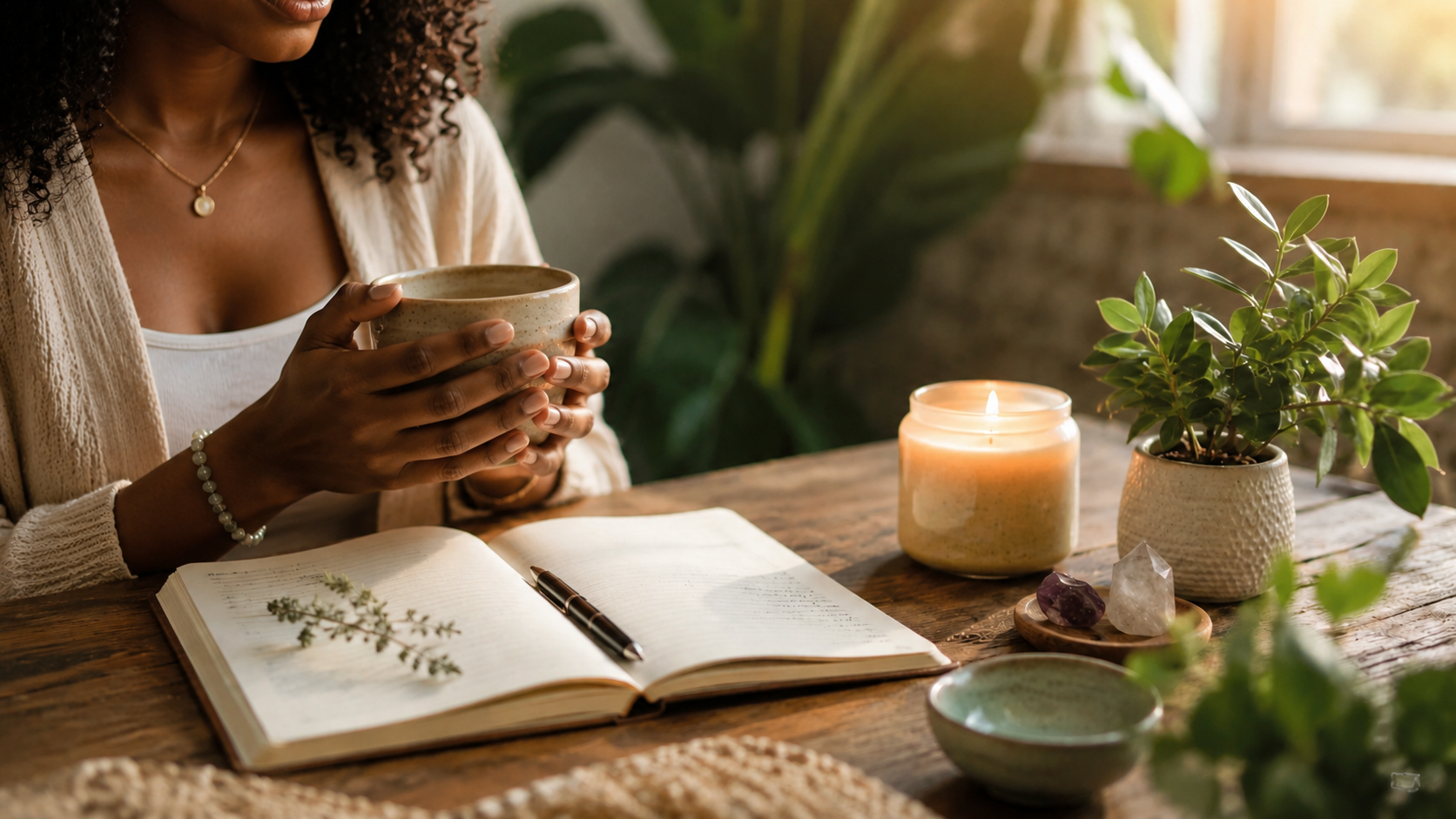
Wellness is not limited to what you eat or how often you exercise. Your thoughts, emotions, relationships, routines, rest, and environment all influence how supported you feel.
Suggested Featured Image: A person journaling beside tea, fruit, plants, and natural light.
Wellness is often divided into separate categories.
Nutrition belongs in one conversation. Mental health belongs in another. Movement, relationships, sleep, work, purpose, and spiritual well-being are each placed into their own boxes.
But people do not live in separate boxes.
You experience life as a whole person. Your thoughts can affect your routines. Your routines can affect your energy. Your energy can influence your relationships, food choices, movement, sleep, and ability to care for yourself.
That is why whole-person wellness matters.
Wellness Is More Than the Absence of Symptoms
You do not need to be experiencing a diagnosed illness to recognize that something feels out of alignment.
You may notice that you are:
Constantly overwhelmed
Struggling to maintain regular meals
Sleeping poorly
Feeling disconnected from your body
Moving through each day without rest
Relying on short-term coping habits
Having difficulty creating boundaries
Feeling mentally or emotionally depleted
These experiences deserve attention.
Whole-person wellness invites you to look beyond a single symptom and explore the routines, pressures, environments, and emotional patterns surrounding it.
Your Mental and Physical Wellness Are Connected
Stress is not only an idea in your mind. It can influence the way you sleep, eat, concentrate, communicate, and move through your day.
Likewise, physical routines may affect how supported you feel emotionally. Regular meals, hydration, appropriate movement, rest, meaningful relationships, and time away from constant demands can all form part of a supportive self-care plan.
This does not mean every health concern can be solved through lifestyle changes. It means your daily life deserves to be included in the conversation about your wellness.
Try a Daily Whole-Person Check-In
Set aside five quiet minutes and ask yourself four questions.
What is happening in my body?
Notice tension, hunger, thirst, discomfort, fatigue, or changes that may need attention.
What is happening in my mind?
Are your thoughts calm, scattered, fearful, focused, or overwhelmed?
What emotion needs to be acknowledged?
You do not need to judge or immediately fix the emotion. Begin by naming it.
What is one supportive action I can take?
Your action might be preparing a meal, drinking water, taking a walk, setting a boundary, contacting someone you trust, resting, journaling, or scheduling professional support.
The action does not need to be dramatic to be meaningful.
Small Practices Create a Supportive Foundation
Consider choosing one practice in each area:
Mental: Reduce unnecessary stimulation, journal, prioritize tasks, or take intentional breaks.
Emotional: Name what you feel, seek support, practice self-compassion, or create healthier boundaries.
Physical: Eat regularly, stay hydrated, move appropriately, and follow up on persistent symptoms.
Social: Spend time with people who allow you to feel safe, respected, and understood.
Environmental: Create one area in your home that feels peaceful, uncluttered, or restorative.
Purpose: Make time for work, creativity, community, faith, or service that feels meaningful to you.
You do not need to address every category at once. Begin with the area that is asking for your attention most clearly.
Know When Self-Care Is Not Enough
Self-care is valuable, but it is not a replacement for professional treatment.
Consider speaking with a qualified healthcare or mental-health professional when distressing symptoms persist, interfere with your responsibilities, affect your relationships, or make it difficult to complete your normal daily activities.
Reaching out for support is not evidence that your wellness practice has failed. It is part of caring for the whole person.
You Are Allowed to Build Wellness Differently
Your wellness routine does not need to resemble anyone else’s.
It may include clinical care and holistic practices. It may involve therapy, nourishing food, medication, herbs reviewed for safety, movement, rest, community, prayer, meditation, journaling, or time in nature.
The important question is not whether your routine looks impressive.
The question is whether it is safe, sustainable, informed, and supportive of the life you are trying to create.
Ready to explore your wellness more intentionally? Learn about Life Liquids Holistic Wellness Consultations and the Sacred Reset approach.
Wellness Disclaimer: The information in this article is educational and should not be used to diagnose or treat a physical or mental-health condition. Contact an appropriate licensed professional when you need individualized support.